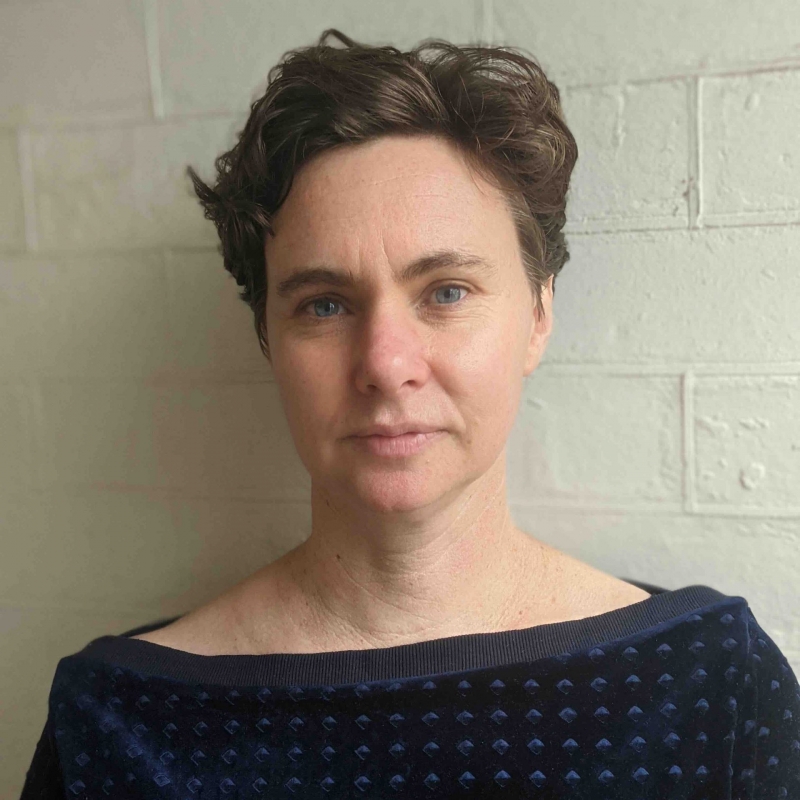
A. Prof. Julie Clutterbuck
Monash University, Australia

Optimising for Impact: Tools and Techniques for Sustainable Decision-Making

This short course explores how mathematical optimisation tools and techniques can be used to support sustainable decision-making aligned with the United Nations Sustainable Development Goals (SDGs). Across five sessions, participants will engage with practical models, algorithms, and tools to address real-world challenges in sustainable supply chains, urban mobility, resource allocation, and resilience planning. Each day combines a lecture on foundational concepts with a hands-on workshop using SageMath, empowering participants to formulate, solve, and interpret optimisation problems in diverse sustainability contexts.
By the end of the course, participants will:

  • Understand the role of mathematical optimisation in sustainability.
  • Apply optimisation models to problems related to logistics, healthcare, urban planning, and climate resilience.
  • Use SageMath to build and analyse diverse decision models.
  • Explore the intersection of artificial intelligence and optimisation in sustainable systems.

Topics:

  1. Foundations of Optimisation and the UN Sustainable Development Goals (SDG)
  2. Sustainable Supply Chains
  3. Smart Resource Allocation
  4. Resilient and Robust Optimisation under Uncertainty
  5. AI Meets Optimisation: Data-Driven Decisions for a Sustainable Future

Relevance

This course will appeal to students, early-career researchers, and professionals in mathematics, engineering, computer science, environmental studies, and related fields who are interested in applying mathematical modelling and optimisation to real-world sustainability challenges. It is particularly relevant for those looking to contribute to data-driven decision-making aligned with the UN Sustainable Development Goals (SDGs).

Pre-requisites

This course is designed to be accessible to participants from diverse disciplinary backgrounds. While no advanced mathematical training is required, participants are expected to have:

  • A basic understanding of linear algebra and introductory mathematical modelling concepts
  • Familiarity with high school-level algebra and functions (e.g., constraints, optimisation objectives)
  • Prior exposure to programming is essential (e.g., Python, MATLAB, R, or similar)
  • An interest in applying mathematics to real-world sustainability and decision-making problems

All mathematical concepts will be contextualised within real-world sustainability challenges, and participants will engage in hands-on modelling using SageMath during workshop sessions.

Pre-Reading

  1. Introduction to Optimization
  2. The UN Sustainable Development Goals (SDGs)
  3. Introduction to SageMath
Associate Professor Julie Clutterbuck

A. Prof. Julie Clutterbuck
Monash University, Australia

Julie Clutterbuck works in geometric analysis, looking at partial differential equations of particular importance in geometry. She is part of the analysis group at Monash University, and was previously at the Australian National University and Freie Universität Berlin.