
Professor Song Sun
Zhejiang University, China
Geometry of Einstein metrics
An Einstein metric is, in Riemannian geometry, the analogue of the vacuum Einstein equation in general relativity. It is among the most important objects of study in differential geometry. The study of Einstein metrics is also deeply connected with several related fields, including partial differential equations, low-dimensional topology, complex algebraic geometry, and mathematical physics etc.
In these lectures, we will introduce the fundamentals of the geometry of Einstein metrics, with particular emphasis on four-dimensional geometry and we will focus on concrete examples.
Relevance
This course would be of interest to students interested in learning differential geometry and relativity.
Pre-requisites
- Basic Riemannian geometry and PDEs
Pre-Reading
- M. Do Carmo, Riemannian Geometry by M. Do Carmo
https://www.scribd.com/document/123292244/Manfredo-Do-Carmo-Riemannian-Geometry
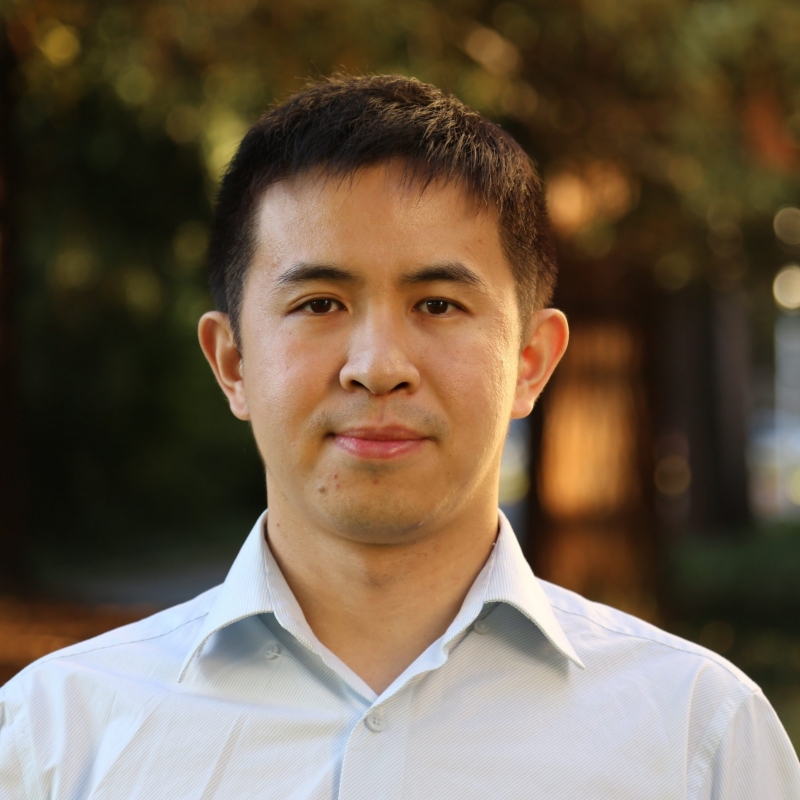
Prof. Song Sun
Zhejiang University, China
Song Sun is currently a Chair professor at the Institute for Advanced Study in Mathematics, Zhejiang University. He was born in 1987 in Huaining county, Anhui province, China. He received a BS from the Special Class for the Gifted Young in University of Science and Technology of China in 2006, and a PhD from University of Wisconsin-Madison in 2010, under the supervision of Xiuxiong Chen. He held a postdoctoral position at Imperial College London from 2010 to 2013, and faculty positions at Stony Brook University from 2013 to 2017 and at University of California, Berkeley from 2018 to 2024. Sun received a Sloan Research Fellowship in 2014, was awarded the Oswald Veblen Prize in Geometry in 2019, and received the Breakthrough Prize in Mathematics – New Horizons in Mathematics in 2021. He was an invited speaker at the ICM 2018.